
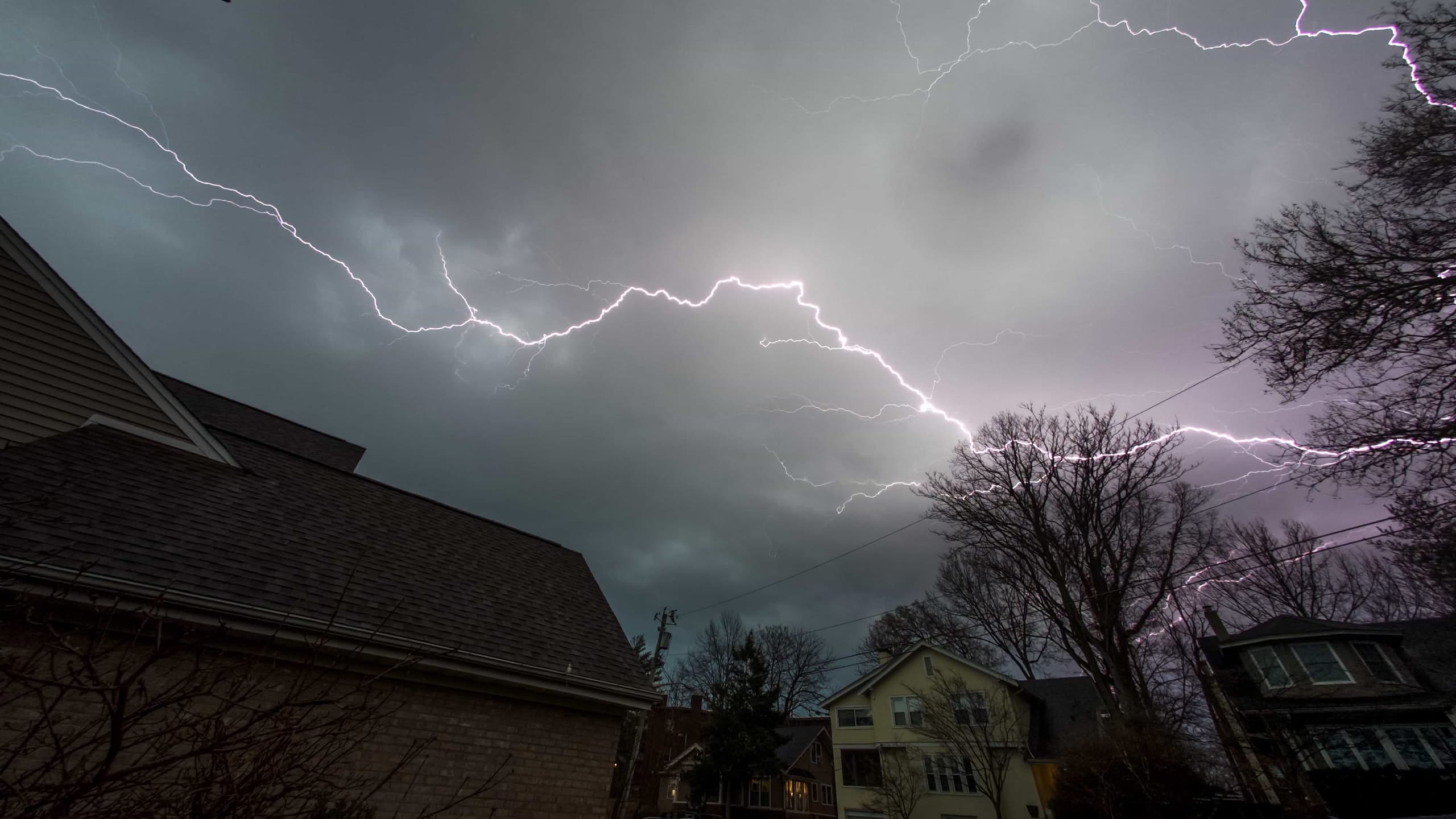
Safely Protect Your Ocala Home From Hidden Storm Dangers
A lightning damage electrical panel can silently compromise your home’s safety after a storm, often leaving no visible exterior burns or marks. If your home was near a recent strike, inner components like circuit breakers and bus bars may be secretly degraded or welded together, posing an immediate fire hazard. Identifying these unseen dangers early is crucial to preventing catastrophic house fires and total power failures across Marion County.
📌 Key Takeaways
-
Invisible Danger: Lightning damage to your electrical panelboard often hides behind the metal deadfront cover, masking melted insulation and contact-welded breakers.
-
Five Critical Signs: Watch closely for localized humming sounds, burning plastic odors, persistently tripping breakers, soot tracking, or erratic voltage fluctuations.
-
Zero-DIY Rule: Never remove your panel’s protective cover yourself. Main utility lines carry lethal, un-fused currents even when your main breaker is shut off.
-
Pro Diagnostics: Licensed professionals utilize advanced infrared thermography and megohmmeters to safely expose hidden micro-faults.
-
Ultimate Protection: Installing a heavy-duty, whole-house Surge Protective Device (SPD) directly to your main service panel provides complete microsecond mitigation.
Table of Contents
-
Understand Ocala’s High-Stakes Lightning Risks
-
Identify the Invisible Mechanics of Surge Damage
-
Spot the Warning Signs of an Overloaded System
-
Avoid Dangerous DIY Electrical Panel Inspections
-
Review the Professional Electrical Diagnostic Blueprint
-
Prevent Future Surge Disasters with Whole-House Protection
-
Secure Your Ocala Home with Trusted Electrical Experts
Understand Ocala’s High-Stakes Lightning Risks
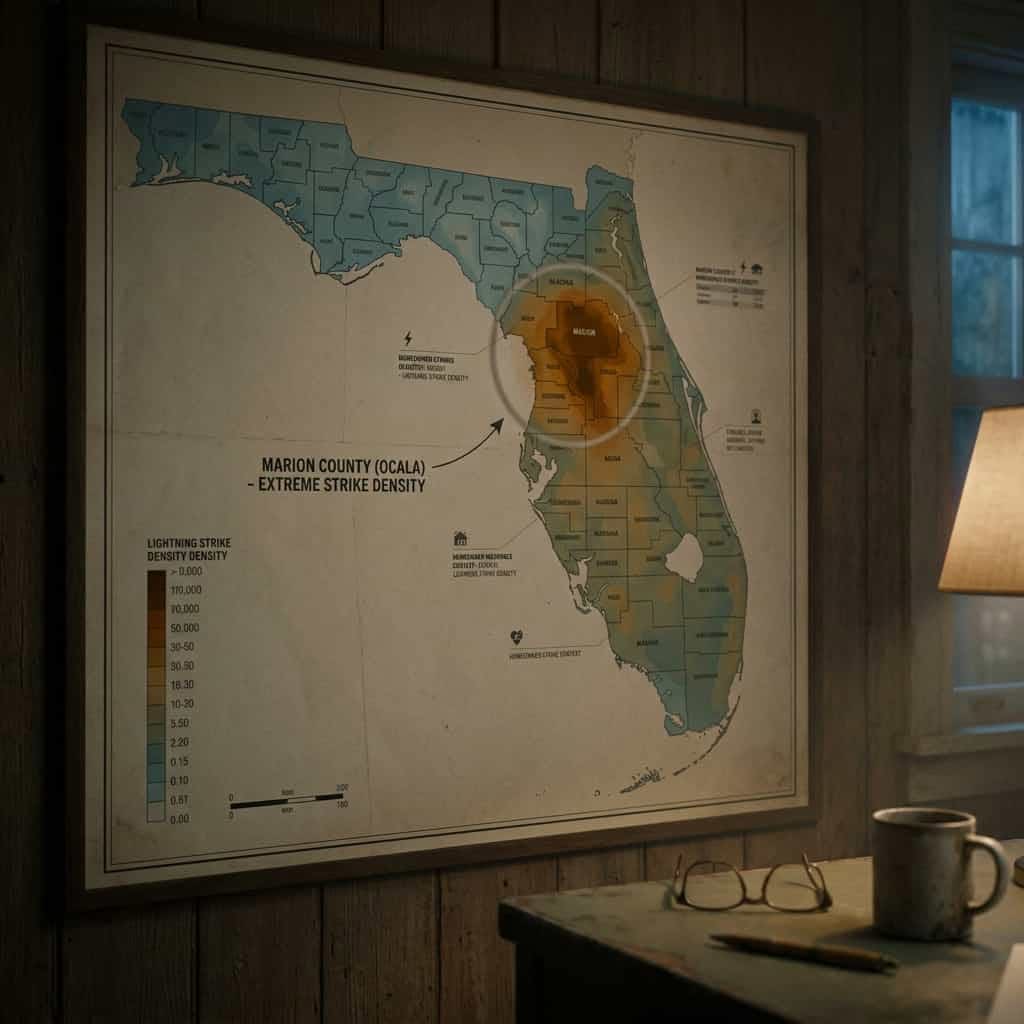
Quick Answer: Central Florida experiences some of the highest lightning strike densities in the United States due to colliding sea breezes. A single atmospheric strike can blast 300 million volts into local utility lines, instantly creating a dangerous lightning damage electrical panel emergency.
Ocala, Florida is world-renowned for its picturesque horse farms, rolling green pastures, and historic canopy roads. However, beneath our beautiful Central Florida skies lies a volatile meteorological reality. Our region sits directly in the heart of America’s infamous “Lightning Alley”.
During our intense summer storm seasons, a single afternoon thunderstorm can unleash thousands of high-voltage cloud-to-ground strikes. These powerful atmospheric discharges frequently disrupt properties all across Marion County.
A single bolt of lightning can pack up to 300 million volts of electricity and roughly 30,000 amps of current. To put that into perspective, your standard residential electrical outlets operate on just 120 volts and 15 to 20 amps.
When lightning strikes an object near your property, the electrical current seeks the path of least resistance to dissipate into the earth. Frequently, that path includes your home’s overhead power lines, underground utility cables, or coaxial television wires.
Once the surge enters your grid, it rushes straight toward your main distribution center. Dealing with a lightning damage electrical panel becomes an immediate threat because the box is forced to process an energy load it was never designed to handle.
📊 Data Point: According to long-term severe weather tracking databases managed by the National Weather Service, Central Florida consistently records over 14 lightning strikes per square kilometer annually. This makes it one of the most electro-statically volatile regions in North America.
Identify the Invisible Mechanics of Surge Damage
Quick Answer: Extreme voltage surges behave like localized flash floods inside your electrical system. This intense thermal energy destroys sensitive components by melting wire insulation, fusing circuit breaker contacts, and pitting metal bus bars.
To accurately identify a lightning damage electrical panel, you must first understand residential infrastructure engineering. Your electrical components are designed to process highly controlled, steady waves of alternating current (AC). They are absolutely not built to withstand the instantaneous, hyper-thermal energy spike of an atmospheric discharge.
When an overvoltage surge breaches your electrical panel, it behaves exactly like a flash flood rushing through a narrow canyon. The energy creates an intense wave of heat and electromagnetic pressure, causing several invisible failures within your system.
Wire Insulation Degradation
The copper wires inside your panel are wrapped in protective plastic or rubber insulation. The extreme heat of a lightning surge can instantly bake, crack, or melt this insulation. This exposes raw wires to one another and creates a permanent fire hazard inside the wall.
Contact-Welded Circuit Breakers
The internal mechanisms of circuit breakers rely on delicate metallic strips that flex to shut off power during a standard overload. A massive surge can instantly weld these internal contacts together. When this happens, the breaker will never trip again, destroying its ability to protect your home.
Metal Bus Bar Pitting
The main metal strips that distribute power to individual breakers are called bus bars. Lightning arcs can jump across these bars, causing microscopic pitting and erosion. This creates loose connections that generate severe heat every single time you turn on an appliance.
Because these structural failures occur deep within the individual components, your home might seem entirely fine immediately following a storm. The lights may stay on, but your primary safety shield has been silently compromised.
💡 Expert Insight: In my years inspecting storm-damaged properties throughout Ocala, I have opened up dozens of breaker boxes that looked perfect on the outside, only to find the internal bus bars completely pitted and glowing under thermal imaging. Never assume external visual clarity equals internal safety.
Spot the Warning Signs of an Overloaded System
Quick Answer: Homeowners can identify a lightning damage electrical panel by listening for strange buzzing sounds, smelling acrid plastic odors, and tracking persistently tripping circuit breakers. Physical scorching or rhythmic light flickering also confirm structural damage.
Because you cannot rely strictly on visual cues, you must activate your other senses—hearing, smell, and observation. These help detect if a storm has compromised your electrical infrastructure. If you notice any of the following symptoms after an Ocala thunderstorm, you are likely dealing with an active lightning damage electrical panel emergency.
Listen for Unusual Humming, Buzzing, or Hissing
A healthy electrical panel should operate in absolute, total silence. If you walk past your breaker box and notice a distinct humming, buzzing, or clicking sound, your system is crying out for help.
This noise is typically caused by electrical arcing. When a surge damages internal components, the current is forced to literally “jump” across microscopic gaps. Arcing creates immense localized heat and is a leading cause of immediate house fires.
Check for Persistent Acrid or Burning Smells
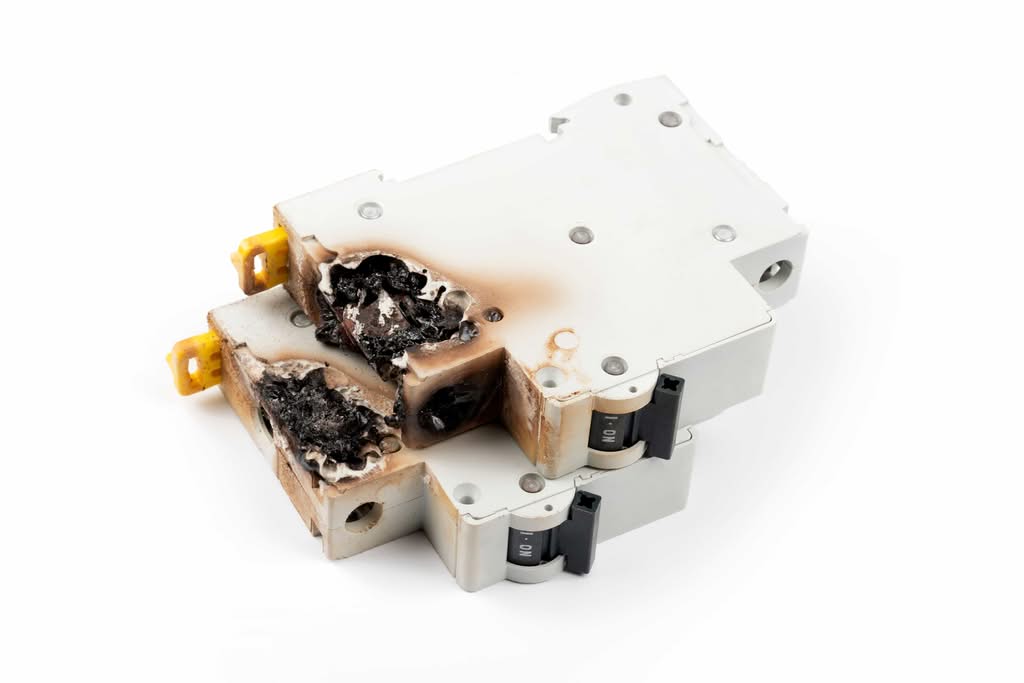
Never ignore a strange odor emanating from your utility room, garage, or wherever your panel is located. A lightning damage electrical panel often produces a very specific, sharp smell. It closely resembles burning plastic, ozone, or fried electronics.
This scent indicates that wire insulation is actively melting or that the plastic housing of your circuit breakers is undergoing thermal breakdown. If you smell this, the danger is imminent. You should immediately coordinate with a professional to inspect the system before localized smoldering turns into open flames.
Monitor Breakers That Repeatedly Trip or Fail to Reset
Circuit breakers are designed to trip when they detect a dangerous overload or a short circuit. If you notice that specific breakers keep flipping to the “off” position after a severe storm, do not simply force them back on over and over again.
The surge may have permanently weakened the internal spring mechanisms of the breaker, making it hyper-sensitive. Alternatively, the storm may have caused a direct short circuit somewhere deep inside your home’s walls.
⚠️ Common Mistake: Constantly resetting a damaged breaker can force volatile currents into a shorted system, dramatically increasing your risk of an electrical fire. If a breaker trips twice after a storm, leave it off until an expert inspects it.
Inspect for Faint Discoloration, Scorching, or Soot Marks
While a lot of damage is hidden, careful external observation can sometimes reveal signs of a major failure. Closely examine the exterior door and edges of your electrical box.
Do you see any faint, yellowish-brown discoloration? Are there tiny black soot marks tracing along the edges of the metal cover? These are definitive tell-tale signs that an intense arc flash occurred inside the panel during the storm, requiring immediate professional intervention.
Observe Unexplained Flickering Lights and Fluctuations
Are your lights suddenly dimming when the refrigerator kicks on? Do your LED bulbs flicker rhythmically, even when the weather outside is perfectly clear?
When a lightning strike alters the integrity of your main electrical panel, it destabilizes the voltage regulation across your entire property. Unstable power flow won’t just annoy you. It will actively fry the sensitive microprocessors inside your smart TVs, computers, HVAC systems, and modern kitchen appliances.
Avoid Dangerous DIY Electrical Panel Inspections
Quick Answer: DIY panel inspections are incredibly hazardous due to un-fused utility lines and explosive arc flash risks. Main power feeds remain fully energized with lethal currents even when your home’s main breaker is switched off.
When faced with home maintenance issues, many homeowners immediately head online to look for a quick, do-it-yourself fix. However, when it comes to assessing a suspected lightning damage electrical panel, DIY intervention must be strictly avoided.
Attempting to diagnose or repair your own electrical panel is extraordinarily dangerous. It can easily result in fatal electrocution or catastrophic arc flash injuries.
Lethal High-Amperage Main Service Lines
Even if you turn off the main breaker at the top of your panel, the thick service cables coming directly from your utility provider remain fully energized. Providers like Ocala Electric Utility or SECO Energy deliver lethal, high-amperage current straight to your box. One accidental slip of a screwdriver can bridge the gap between these live wires and your body, causing instantaneous cardiac arrest.
Explosive Arc Flash Hazards
A damaged panel is inherently unstable. Simply removing the external metal cover can shift loose, heat-weakened wires inside.
If a live wire touches the grounded metal enclosure, it can trigger an arc flash. This is an explosive electrical discharge that reaches temperatures hotter than the surface of the sun. This explosion emits blinding light, molten metal shrapnel, and devastating pressure waves.
✅ Quick Tip: As of 2026, national safety codes mandate specific personal protective equipment (PPE) for anyone opening a main electrical service panelboard. Protect your family by keeping the panel door closed and calling a licensed specialist.
Review the Professional Electrical Diagnostic Blueprint
Quick Answer: Licensed electricians utilize advanced diagnostic tools to uncover hidden surge faults without endangering your property. Technicians deploy thermal imaging, megohmmeters, and power quality analyzers to verify system safety.
When you hire a licensed electrical contractor to inspect a suspected lightning damage electrical panel, they do not simply look inside with a flashlight. True diagnostic expertise requires a systematic approach using advanced tools to uncover hidden thermal and electrical faults.
| Professional Tool | Practical Function in Surge Diagnostics | Why It Matters for Your Safety |
| Infrared Thermal Cameras | Detects hidden, localized hotspots behind the panel board without disrupting active circuits. | Identifies loose connections and arcing before they cause a fire. |
| Megohmmeters (Meggers) | Applies high-voltage testing to evaluate the microscopic integrity of wire insulation throughout the home. | Ensures that hidden wiring inside your walls hasn’t melted. |
| Digital Power Quality Analyzers | Measures waveform distortions and voltage fluctuations to ensure clean power delivery. | Protects your high-end electronics from unstable voltage. |
By having an expert verify the health of your infrastructure, you ensure compliance with local safety standards. This matches regulations defined by organizations like the National Fire Protection Association (NFPA).
Prevent Future Surge Disasters with Whole-House Protection
Quick Answer: Standard plug-in power strips cannot stop massive atmospheric lightning surges. True protection requires a professionally installed, whole-house Surge Protective Device (SPD) wired directly into your main electrical breaker box.
Dealing with a lightning damage electrical panel after the fact can be incredibly stressful and expensive. The smartest way to manage volatile Florida weather is to stop surges before they ever reach your delicate internal breakers.
Standard power strips purchased at big-box retailers offer virtually zero protection against a massive atmospheric discharge. They are designed to absorb tiny, routine fluctuations from the power grid, not millions of volts of lightning energy.
The ultimate line of defense for any Ocala home is a professionally installed, heavy-duty whole-house surge protective device (SPD).
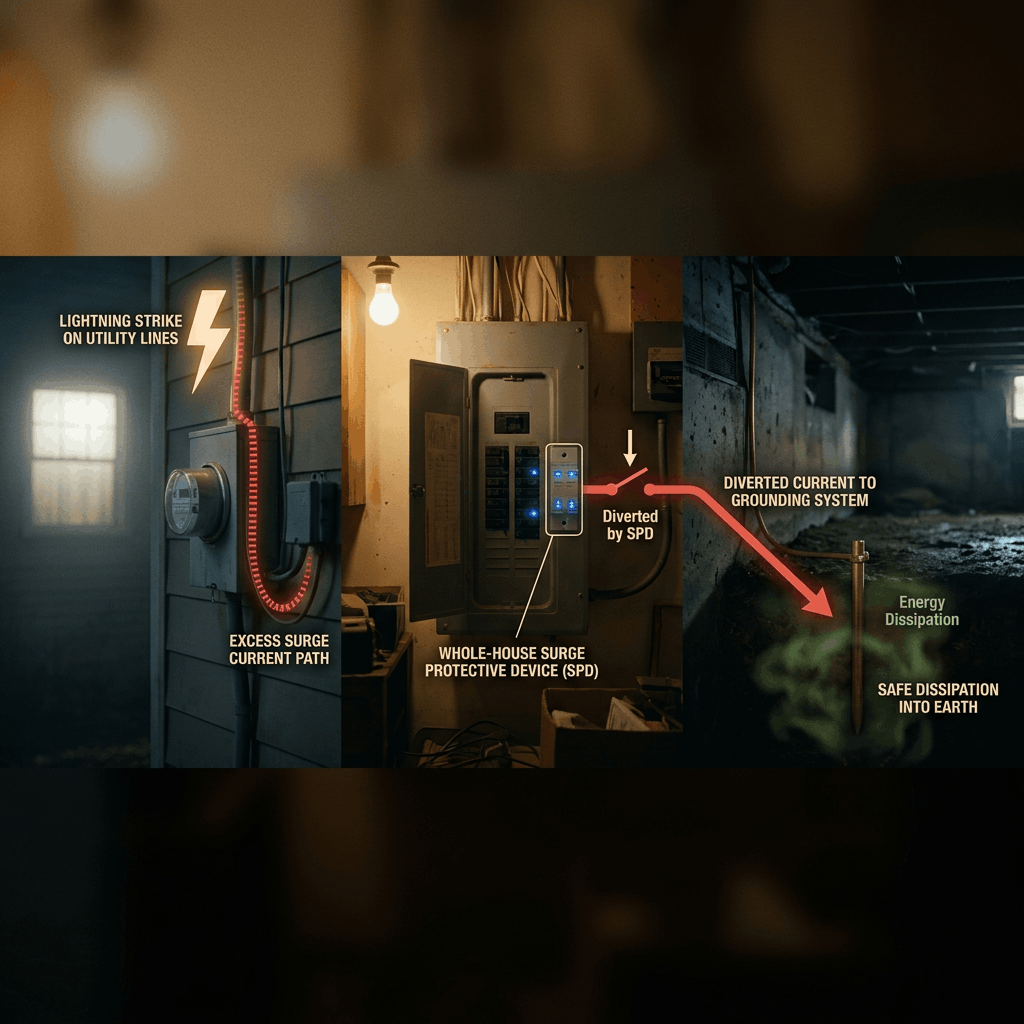
When a licensed technician integrates a high-quality SPD directly into your main electrical service panel, it acts as an automated security guard. The device protects your home’s entire power grid around the clock.
The moment an abnormal voltage spike rushes down the utility lines, the surge protector instantly detects the anomaly. It safely diverts the excess electricity deep into the earth through your home’s grounding system.
This mitigation happens in less than a single microsecond. It keeps the destructive energy entirely out of your breaker box, protecting your household wiring, and shielding your expensive appliances from permanent harm.
Frequently Asked Questions
Can lightning damage an electrical panel without a direct hit?
Yes, lightning frequently damages home panels through indirect strikes. When a bolt hits a nearby tree, utility pole, or ground area, the massive electrical charge travels through overhead power lines or underground cables straight into your home’s main breaker box.
What are the primary signs of a lightning damage electrical panel?
The primary indicators include unusual humming or buzzing sounds coming from the box, a strong smell of burning plastic or ozone, and circuit breakers that repeatedly trip. You may also notice rhythmic flickering lights or faint black soot marks around the edges of the panel cover.
How do professionals test for electrical panel lightning damage?
Licensed technicians use advanced diagnostic instruments like infrared thermal cameras to scan for hidden heat signatures. They also deploy megohmmeters to evaluate the structural integrity of your wire insulation and utilize power quality analyzers to track hidden voltage fluctuations.
Will standard plug-in power strips protect my appliances from lightning?
No, standard power strips do not have the capacity to handle atmospheric power surges. They are built to absorb minor grid fluctuations, whereas a lightning surge introduces millions of volts that will easily bypass a standard power strip and fry your electronics.
Why does my breaker box smell like burning plastic after an Ocala storm?
A burning plastic or acrid ozone smell indicates that the intense thermal energy from a lightning surge is actively melting wire insulation or damaging the plastic components inside your breakers. This represents an immediate fire emergency that requires a professional inspection.
Is it safe to reset a breaker that tripped during a lightning storm?
It is not safe to repeatedly reset a breaker that trips after a storm. The surge may have caused a permanent short circuit within your walls or structurally failed the internal breaker components, meaning forcing it back on can cause an immediate fire.
Secure Your Ocala Home with Trusted Electrical Experts
A lightning damage electrical panel is a ticking time bomb. The subtle, silent degradation caused by Central Florida’s fierce thunderstorms can easily transform from an unnoticeable internal anomaly into a devastating house fire or a complete electrical system failure.
Do not gamble with your family’s safety or risk costly property damage by ignoring the subtle signs of storm degradation or attempting a highly hazardous DIY inspection.
If you suspect your home has been compromised by a recent lightning strike, turn to the certified team at Tropical Electric. Our highly trained, deeply experienced technicians specialize in comprehensive post-storm diagnostics, reliable Ocala electrical panel replacement and repairs, and the flawless integration of heavy-duty whole-home surge protection solutions.
We are proud to serve the entire Marion County community with unwavering integrity, unmatched expertise, and an absolute commitment to safety. Contact Tropical Electric today to schedule your professional electrical safety inspection and secure complete peace of mind for your home!