
An emergency generator for home Ocala properties is the most reliable way to keep lights, refrigeration, and medical equipment running when Florida storms knock out the grid. Marion County sees frequent summer thunderstorms and hurricane-season outages, and a power loss of even a few hours can spoil food, disable well pumps, and leave homes without air conditioning. The right backup power system, sized correctly and installed to code, solves all three problems at once.
We’ve wired generators for families from Belleview to Silver Springs who learned the hard way that a cheap, undersized unit creates more frustration than it fixes. This guide walks through generator types, sizing, cost, and the safety code details local homeowners ask about most.
📌 Key Takeaways
- A whole-home standby generator starts automatically within seconds of an outage; portable units require manual setup.
- Proper sizing depends on square footage, well pump load, and HVAC — not just a generic "big enough" guess.
- Florida requires a listed transfer switch to legally and safely connect any generator to home wiring.
- Budget roughly $4,000–$6,000 for a mid-size portable setup with interlock, and $10,000–$18,000+ for a fully installed whole-home system.
- Annual maintenance and a pre-storm test run prevent the most common generator failures.
Jump to a section:
- What Is an Emergency Generator for Home Ocala Backup?
- Portable vs. Standby: Which Type Fits Your Home?
- How to Size a Generator for Your Ocala Home
- Emergency Generator Cost in Ocala and Nearby Areas
- Installation Requirements and Safety Codes
- Maintenance and Storm Prep Checklist
- FAQ
What Is an Emergency Generator for Home Ocala Backup?
Quick Answer: An emergency generator for home Ocala use is a fuel-powered unit that restores electricity to part or all of a house during a utility outage. It can be portable and manually connected, or a permanently installed standby unit that starts on its own.
The term "backup power system" covers a wide range of equipment, from a small gas unit that runs a refrigerator and a few lamps to a 22-kilowatt standby generator that powers an entire home, including central air. What matters most is matching the equipment to your household’s actual needs, not just buying the biggest box at the hardware store.
In our experience serving Marion, Sumter, and Lake county homeowners, the deciding factor is usually how often outages happen and how much is at stake. A family with a well pump, a home office, and a parent on oxygen equipment has very different needs than a weekend getaway property in Astor.
💡 Expert Insight: According to the U.S. Department of Energy, sizing a generator correctly — rather than overbuying — is one of the biggest factors in long-term reliability and fuel efficiency.
Why Ocala-Area Homes Need Reliable Backup Power
Marion County’s rural stretches, from Ocklawaha to Candler, often see longer restoration times after storms than denser neighborhoods. Well water systems also depend entirely on electricity, so losing power can mean losing running water too.
Portable vs. Standby: Which Type Fits Your Home?
Quick Answer: Portable generators cost less upfront and work for short outages, while standby generators cost more but deliver automatic, whole-home protection with far less manual effort.
Both options can legally and safely power a home, but only when installed with the correct safety equipment. Choosing between them usually comes down to budget, how often you lose power, and how much of the house you want covered.
Portable Generators Explained
A portable generator runs on gasoline or propane and needs to be manually started, fueled, and connected — typically through an interlock kit or a manual transfer switch. It’s a solid entry point for homeowners who experience occasional short outages and want to cover essentials like a refrigerator, a few outlets, and a window AC unit.
The tradeoff is hands-on operation: someone has to pull it out, start it, and refuel it every several hours. For a deeper side-by-side, see our portable generator vs. whole-home comparison.
Standby Generators Explained
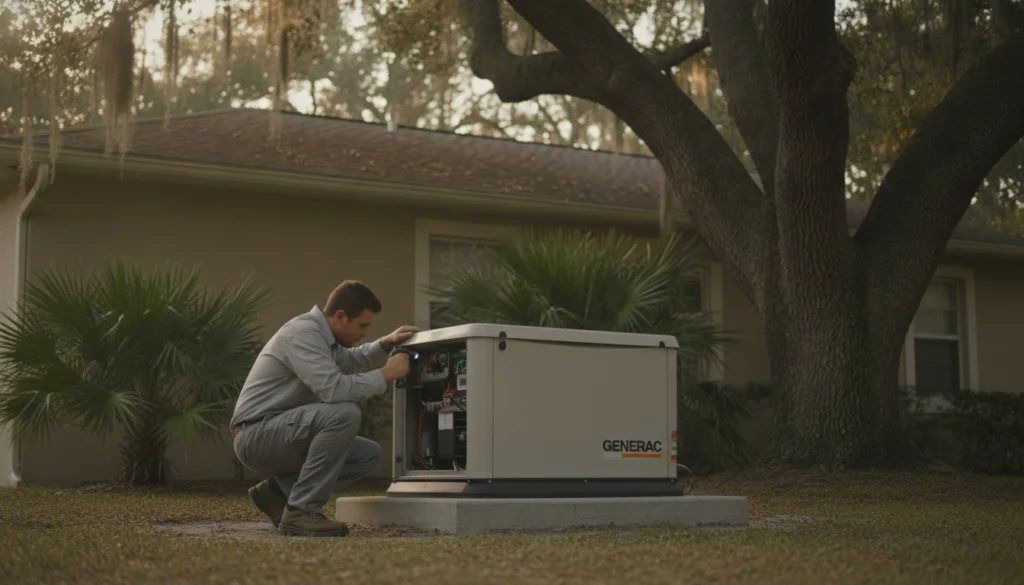
A standby (whole-home) generator sits permanently outside on a concrete pad, runs on natural gas or propane, and starts automatically within seconds of detecting an outage — no manual setup required. It’s wired through a dedicated automatic transfer switch that disconnects the home from the utility grid before powering it from the generator, which is a critical safety step.
⚠️ Common Mistake: Backfeeding a generator into a dryer outlet without a transfer switch is illegal in Florida and can electrocute utility workers restoring power on the line. Always use a code-compliant switch.
| Feature | Portable Generator | Standby Generator |
|---|---|---|
| Startup | Manual | Automatic |
| Typical cost (installed) | $800–$3,500 unit + setup | $7,000–$18,000+ |
| Fuel | Gas or propane (refuel often) | Natural gas or propane (continuous) |
| Coverage | Select circuits | Whole home or near-whole home |
| Best for | Occasional short outages | Frequent or extended outages |
How to Size a Generator for Your Ocala Home
Quick Answer: Sizing depends on total wattage needs — add up essential appliances, your well pump, and HVAC if desired, then choose a generator with headroom above that total.
An electrician calculates "starting watts" and "running watts" separately, since motors like well pumps and AC compressors draw a surge of power when they first kick on. Skipping this step is the most common reason homeowners end up with a generator that trips offline right when they need it most.
A Simple Sizing Walkthrough
- List every circuit you want backed up — refrigerator, well pump, lights, a few outlets, and HVAC if applicable.
- Add the running wattage of each item, then note the single highest starting-watt item (often the AC compressor or well pump).
- Choose a generator rated above the combined running load plus that highest starting surge.
- Confirm the fuel type available at your property — natural gas, propane tank, or gasoline.
- Have a licensed electrician verify the calculation before purchase, since undersizing is expensive to fix later.
📊 Data Point: The Federal Emergency Management Agency notes that households with a documented emergency power plan recover essential services significantly faster after a disaster than those without one.
Emergency Generator Cost in Ocala and Nearby Areas
Quick Answer: A basic generator for home backup, portable with an interlock kit, typically runs $800–$3,500 fully set up, while a whole-home standby system usually lands between $10,000 and $18,000 installed.
Cost swings based on generator size, fuel line work, concrete pad requirements, and whether your electrical panel needs upgrades to accept a transfer switch. Homes with older panels, including some in Weirsdale and Summerfield, may need panel work first — see our 200-amp panel upgrade guide for context.
What Drives the Price Up or Down
Propane tank installation, trenching for gas lines, and permit fees all add to the standby generator total. On the lower end, a well-chosen portable unit with a properly installed interlock kit can meet basic needs for a fraction of the cost — our interlock kit vs. transfer switch breakdown explains the tradeoffs in plain terms.
✅ Quick Tip: Ask for a written load calculation with any generator quote. A proposal without one is a red flag, not a shortcut.
Installation Requirements and Safety Codes
Quick Answer: Florida requires a permitted installation with a listed automatic or manual transfer switch, correct clearances from windows and doors, and adherence to National Electrical Code rules.
Generators also produce carbon monoxide, a colorless, odorless gas that can be fatal in enclosed or poorly ventilated spaces. According to the Centers for Disease Control and Prevention, generators should always run well away from windows, doors, and attached garages, regardless of weather.
Transfer Switches: The Safety Link
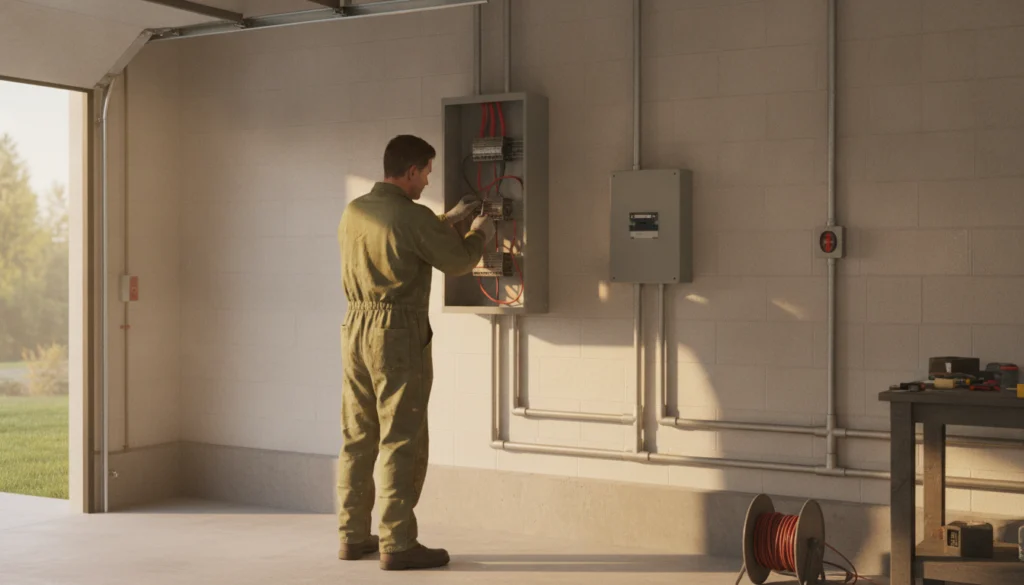
A transfer switch is the component that prevents a generator from backfeeding electricity into utility lines, protecting both your home and line workers. If yours is humming, tripping, or failing to switch over during tests, review our transfer switch failure signs guide before an outage, not during one.
Many new builds now include a generator pre-wire at construction time, which keeps future installation faster and cleaner. For existing homes, our team handles the full permitted generator installation process from load calculation to final inspection.
⚠️ Common Mistake: Running an extension cord from a portable generator directly into the home through a cracked door or window bypasses every safety protection a transfer switch provides.
Maintenance and Storm Prep Checklist
Quick Answer: Run your generator monthly, change oil per the manufacturer schedule, and schedule a professional checkup before hurricane season starts each year.
A generator that sits unused for months can develop fuel system issues, dead batteries, or stale gasoline — the opposite of "ready when you need it." According to the Occupational Safety and Health Administration, routine maintenance and testing under load are essential to reliable generator performance.
Pre-Storm Checklist
- Test-run the generator under load, not just idle, at least once a month.
- Check propane or gas supply and confirm the tank or line is full before storm season.
- Inspect the transfer switch for corrosion, loose wiring, or failure to engage.
- Keep fresh oil and an extra air filter on hand for standby units.
- Schedule annual professional service, similar to how you’d treat HVAC maintenance.
💡 Expert Insight: We tell Ocala and Lady Lake clients the same thing every spring — a generator is only as reliable as its last real test run, not its last purchase date.
FAQ
What size emergency generator do I need for a home in Ocala?
Most 2,000–3,000 square foot homes need a 16–22 kW standby generator to cover HVAC, a well pump, and essential circuits comfortably. A licensed electrician should calculate exact wattage based on your specific appliances and well pump horsepower.
How much does an emergency generator for home Ocala installation cost?
Portable setups with an interlock kit typically run $800–$3,500 installed, while whole-home standby systems range from $10,000–$18,000 or more depending on size and site work. Costs rise if panel upgrades or gas line trenching are required.
Can I install a generator myself to save money?
Florida law requires a permitted electrical connection with a listed transfer switch, which means DIY backfeeding setups are both illegal and dangerous. A licensed electrician protects your home, your warranty, and utility line workers during restoration.
Is a portable generator enough for hurricane season?
A portable generator can cover essentials like refrigeration and a few outlets for short outages, but it requires manual operation and frequent refueling. For multi-day outages common after major storms, a standby system offers far less hassle.
How long can a standby generator run during an extended outage?
A natural gas standby generator can run continuously as long as the gas supply holds, since it isn’t limited by a fuel tank. Propane units run until the tank empties, so sizing the tank to expected outage length matters.
Do emergency generators need an annual inspection?
Yes — annual professional service checks the battery, fuel system, and transfer switch before storm season arrives. Skipping inspections is the leading cause of generators failing exactly when they’re needed most.
What is a transfer switch and why is it required?
A transfer switch isolates your home’s wiring from the utility grid before the generator powers it, preventing dangerous backfeed onto power lines. It’s a code requirement in Florida for any generator connected directly to household wiring.
Final Thoughts
Choosing the right emergency generator for home Ocala properties comes down to honest sizing, code-compliant installation, and realistic maintenance habits. Whether you land on a portable unit with an interlock kit or a fully automatic whole-home standby system, the goal is the same: power that actually works when the grid doesn’t. Homeowners across Belleview, Ocala, Summerfield, and The Villages have learned that a properly installed system pays for itself the first time a storm rolls through.
- Calculate your household’s essential wattage needs, including well pump and HVAC surge loads.
- Decide between a portable or standby system based on outage frequency and budget.
- Confirm your panel and transfer switch meet current Florida code requirements.
- Schedule professional installation and a pre-storm test run before hurricane season.
Tropical Electrical is a Veteran-Owned electrical contractor serving Marion, Sumter, and Lake counties; license information is available on request and on our site. Contact our team today to schedule a generator consultation before the next storm season arrives.