
Interlock Kit vs. Transfer Switch: Ultimate Guide to the Best Portable Generator Setup for The Villages Homes
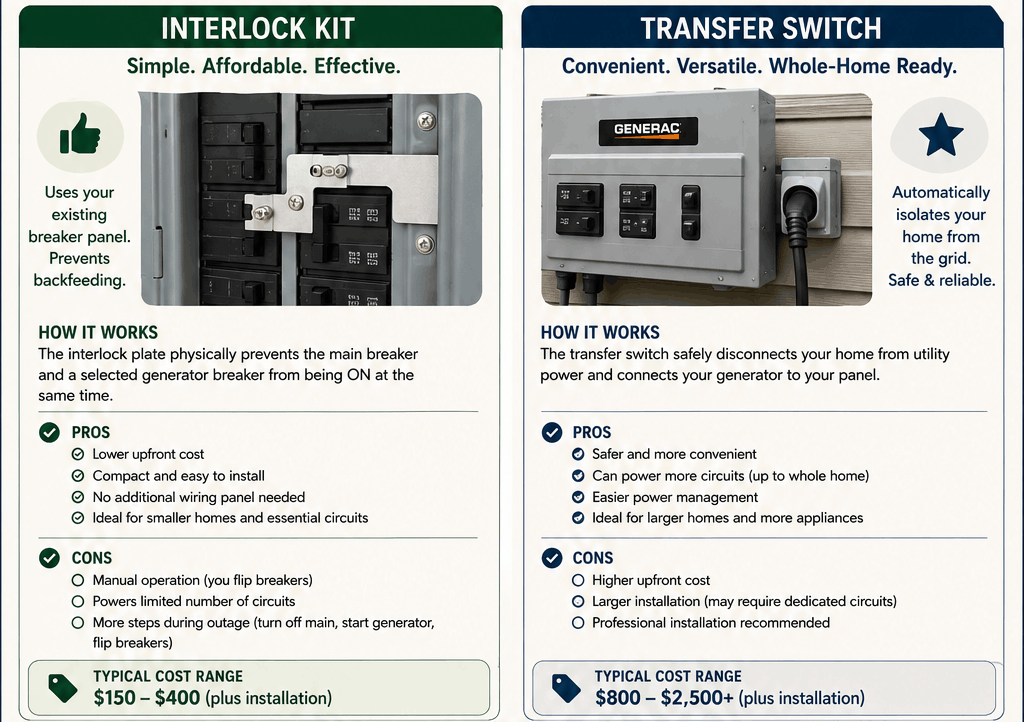
Choosing between an Interlock Kit vs. Transfer Switch depends entirely on whether you prioritize whole-panel circuit flexibility on a strict budget, or a dedicated, foolproof backup power setup for selected critical appliances. Both methodologies provide code-compliant protection against hazardous electrical backfeeding, yet they distribute power across your residential infrastructure in fundamentally different ways. Selecting the ideal architecture requires balancing your portable generator’s power capacity with your household’s daily operational needs.
📌 Key Takeaways
Interlock Kits modify your existing electrical panel configuration to provide full access to every single household breaker on an affordable budget.
Manual Transfer Switches function as an independent electrical subpanel, isolating 6 to 10 pre-selected emergency circuits for automated load safety.
National Electrical Code (NEC) mandates a mechanical disconnect device on all residential backup power generation systems to prevent lethal utility backfeeding.
The Villages Regulations across Sumter, Lake, and Marion counties require verified electrical permits and professional, aesthetic exterior conduit installations.
Load Management is mandatory with interlock systems; running heavy appliances simultaneously will instantly overload a standard portable generator.
Table of Contents
-
The Critical Need for Generator Isolation: Eliminating Backfeeding
-
What Is an Electrical Interlock Kit?
-
What Is a Manual Transfer Switch?
-
Head-to-Head Comparison: Interlock Kit vs. Transfer Switch
-
The Villages, FL: Specific Grid Logistics, HOAs, and Permitting
-
The Lethal Dangers of DIY Electrical Installations
-
Why Professional Installation Is Non-Negotiable for Insurance and Compliance
-
Frequently Asked Questions (FAQs)
-
Conclusion: Secure Your Peace of Mind with Tropical Electric FL
The Critical Need for Generator Isolation: Eliminating Backfeeding
Quick Answer: Generator isolation is a legal safety protocol that mechanically stops emergency backup power from flowing outward into public utility grids. This safety barrier eliminates backfeeding, protecting electrical utility workers from fatal shocks while repairing downed distribution lines.
When severe tropical storms, hurricanes, or unexpected grid failures disrupt life in Central Florida, having a reliable emergency backup power system changes from a luxury into an absolute necessity. For residents living in America’s premier retirement community, choosing how to connect emergency power to your property requires balancing local building codes, community regulations, and personal safety.
If you own a portable generator, you face a critical technical decision before the next storm season arrives: should you install an Interlock Kit vs. Transfer Switch? As the trusted local authority for residential energy systems, Tropical Electric FL created this comprehensive guide to help you evaluate the two safest, code-compliant methods for powering your home with a portable generator. Below, we break down the mechanics, legalities, costs, and spatial considerations of each option so you can confidently secure your household’s safety.
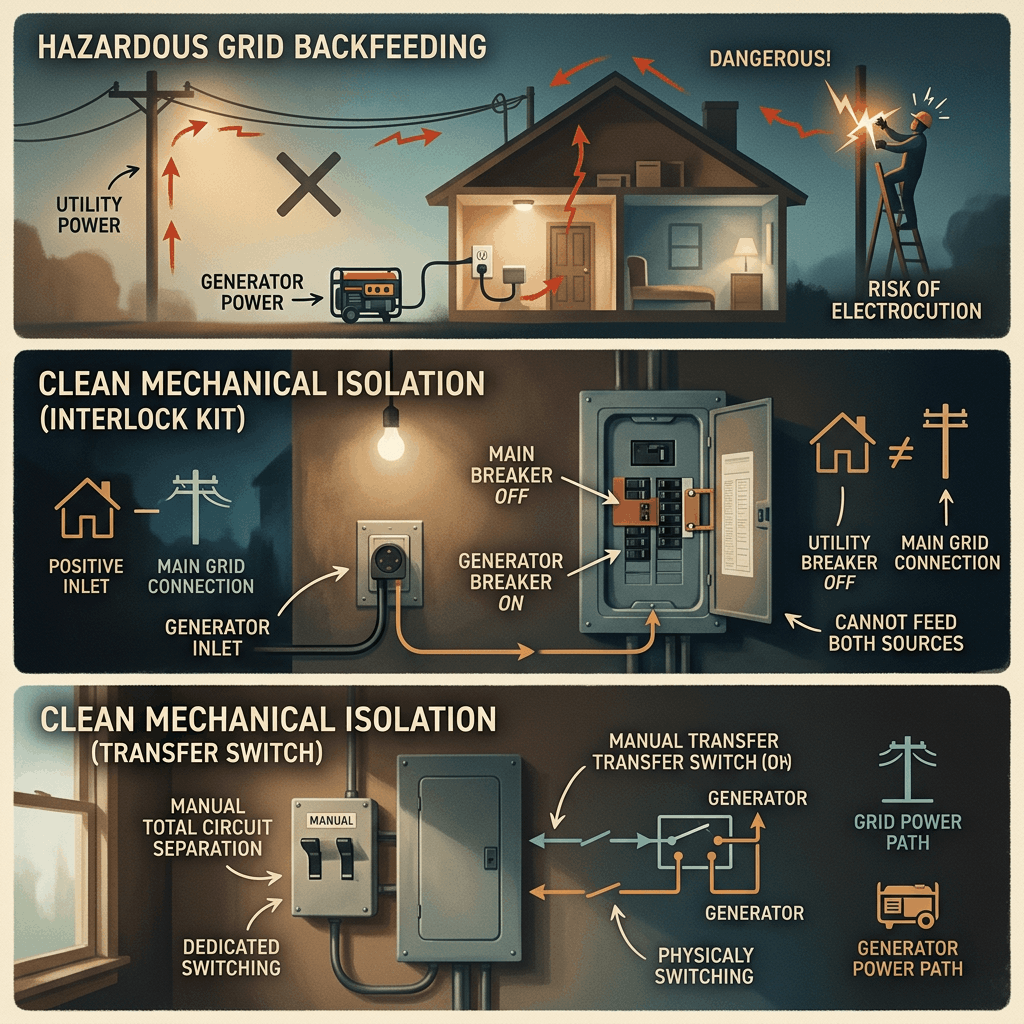
Understanding the Mechanics of Electrical Backfeeding
You cannot simply plug a portable generator into a standard wall outlet using a modified, double-male power cord. Doing so creates a highly hazardous and illegal condition known as backfeeding.
When a generator backfeeds your home, electricity travels backward through your electrical panel, exits your property, and flows onto the neighborhood utility lines. This creates a lethal environment for utility line workers who are working downstream to restore power under the assumption that grid lines are dead.
[Portable Generator] ──> [Wall Outlet] ──> [Main Panel] ──> [Utility Meter] ──> [Lethal Grid Backfeeding]
To eliminate this hazard, the National Electrical Code (NEC) mandates that every residential backup system must feature an isolated, mechanical break to disconnect the home from the utility grid before generator power can enter the panel. Both the interlock kit and the manual transfer switch are designed specifically to fulfill this safety requirement.
What Is an Electrical Interlock Kit?
Quick Answer: An electrical interlock kit is a sliding mechanical plate attached to your existing electrical panel door. It physically prevents the main utility breaker and the emergency generator breaker from being turned on at the same time.
An electrical interlock kit is a specialized, mechanical safety device consisting of engineered metal or heavy-duty plastic plates. These plates are physically fastened directly onto the face of your home’s existing main breaker panel.
How an Interlock Kit Operates
The physical design of an interlock kit creates a strict mechanical barrier between your main utility breaker and the secondary generator backfeed breaker. Because of this sliding metal plate, you cannot have the main utility breaker and the generator breaker switched “ON” at the exact same time.
To transition your home to portable generator power:
-
You must manually turn off the main utility breaker.
-
Only then can you slide the mechanical interlock plate out of the way.
-
Sliding the plate unblocks the generator breaker, allowing you to flip it to the “ON” position.
This physical restriction removes human error from the equation, ensuring that your home is completely cut off from the municipal grid before any generator power is introduced.
+──────────────────────────────────────────+
|  [MAIN BREAKER: ON]                      |
|  [Sliding Interlock Plate Blocks Gen]    |
|  [GENERATOR BREAKER: LOCKED OFF]         |
+──────────────────────────────────────────+
                     │  (Slide Plate Up)
                     ▼
+──────────────────────────────────────────+
|  [MAIN BREAKER: FORCE-SWITCHED OFF]     |
|  [Sliding Interlock Plate Blocks Main]   |
|  [GENERATOR BREAKER: UNLOCKED ON]        |
+──────────────────────────────────────────+
The Key Advantages of an Interlock Kit
-
Total Panel Versatility: An interlock kit feeds power to your entire electrical bus bar. This means you can run any circuit in your home, provided your portable generator produces enough starting and running wattage to support it.
-
Cost-Effective Infrastructure: Because it adapts your existing electrical box rather than requiring an entirely separate subpanel, the hardware costs are significantly lower.
-
Minimal Space Footprint: The interlock kit sits entirely within or on the cover of your existing panel box, keeping your garage wall clean and uncluttered.
💡 Expert Insight: In our years upgrading systems across Florida, we find that homeowners love the absolute flexibility of an interlock kit. It lets you choose to power your main living area during a storm, then shift that power to your guest bedroom outlets at night without complex rewiring.
The Limitations of an Interlock Kit
-
Active Load Management Demands: Because you have access to every breaker in your home, you must practice strict electrical discipline. If you forget to turn off power-hungry appliances, like your central HVAC unit, electric water heater, or clothes dryer, before starting up your generator, you will instantly overload and stall the generator engine.
-
Panel Compatibility Issues: Interlock kits are not universal. They must be precision-engineered and UL-listed for your specific panel brand (e.g., Square D, Siemens, Eaton, Cutler-Hammer). If your home has an obsolete panel model, a safe interlock kit might not exist.
⚠️ Common Mistake: Buying an unbranded, generic interlock plate online to save money is a massive risk. These uncertified components lack official UL-listings, frequently fail local municipal building inspections, and can void your home insurance policy if an accident occurs.
What Is a Manual Transfer Switch?
Quick Answer: A manual transfer switch is an independent, dedicated subpanel installed right next to your main electrical panel. It permanently isolates a fixed group of essential household circuits for immediate emergency backup power.
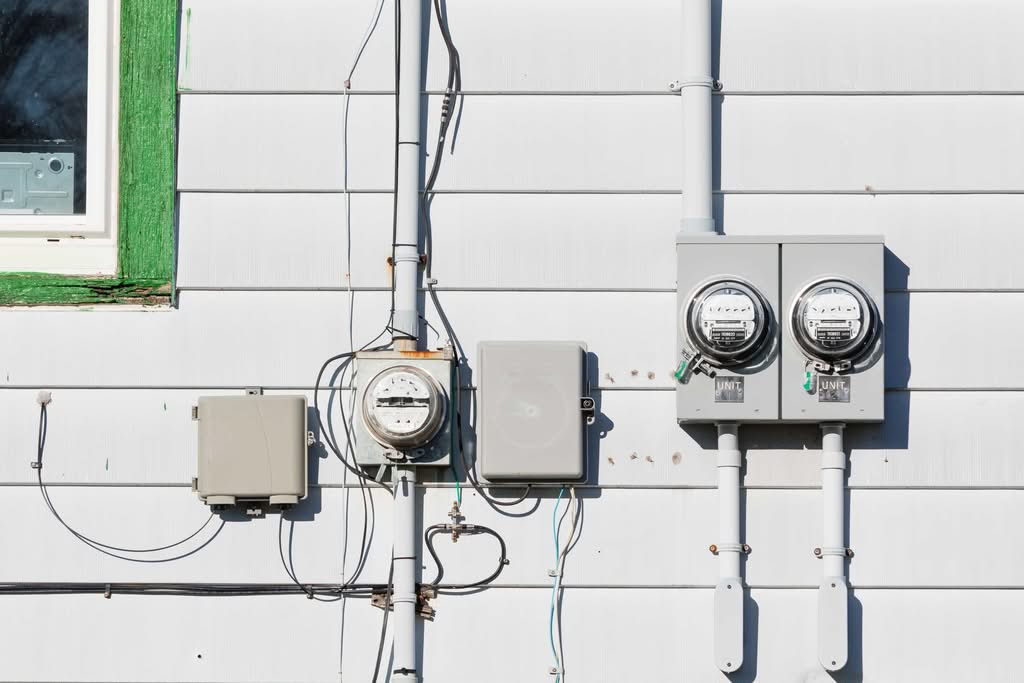
A manual transfer switch is a completely separate electrical subpanel that is installed directly adjacent to your home’s primary electrical service panel.
How a Transfer Switch Operates
During installation, a selection of essential, critical circuits are physically removed from your main panel and permanently re-routed directly into the manual transfer switch subpanel. Typical critical circuits chosen by homeowners include:
-
The kitchen refrigerator and deep freezer.
-
The primary HVAC blower motor or select window AC units.
-
A dedicated circuit for medical equipment or CPAP machines.
-
The home security system, Wi-Fi router, and specific living room lighting zones.
-
The master bedroom outlets.
When utility power fails, you plug your portable generator into an exterior power inlet box, walk over to the subpanel, and flip the heavy-duty toggle switches from “LINE” (utility power) to “GEN” (generator power). This instantly routes generator electricity strictly to those specific, pre-determined emergency zones.
The Key Advantages of a Transfer Switch
-
Foolproof Load Safety: Because the transfer switch is limited to a fixed set of pre-calculated circuits, there is almost zero risk of accidentally overloading your generator.
-
Intuitive Operation: There is no need to hunt through dozens of unmarked switches on your main panel in the dark. You simply flip the clearly labeled toggles on the subpanel.
-
Integrated Wattage Metrics: Premium manual transfer switches come equipped with built-in analog or digital watt meters. This allows you to monitor your generator’s real-time load balance across its individual electrical legs.
📊 Data Point: According to an analysis of residential power backup safety metrics, over 40% of emergency generator failures during unexpected grid outages stem directly from user error caused by improper manual load balancing on unmonitored electrical panels.
The Limitations of a Transfer Switch
-
Rigid Operational Boundaries: You are strictly locked into the circuits configured during installation. If you suddenly need power in a spare bedroom or guest bathroom that wasn’t wired into the transfer switch, you cannot access it without hiring an electrician for a comprehensive system rewire.
-
Higher Upfront Investment: The complex engineering, extra subpanel box, heavy copper conduit, and labor-intensive re-wiring process make a transfer switch a more expensive choice than an interlock kit.
✅ Quick Tip: If you choose a manual transfer switch setup, write down a prioritized list of your home’s absolutely vital appliances beforehand. Grouping critical medical equipment and refrigeration on your transfer layout ensures you protect what matters most during a major weather event.
Head-to-Head Comparison: Interlock Kit vs. Transfer Switch
Quick Answer: While an interlock kit provides total panel access and maximum financial savings, a manual transfer switch delivers structured safety margins, integrated power monitoring, and foolproof operation.
To clarify your path forward, review this side-by-side technical breakdown highlighting the primary operational and structural differences between an Interlock Kit vs. Transfer Switch setup:
| Technical Feature | Generator Interlock Kit | Manual Transfer Switch Subpanel |
| Circuit Access Range | Unlimited (Feeds the entire main panel bus bar) | Restricted (Feeds 6 to 10 pre-wired circuits) |
| Load Management Style | Strict manual intervention required by user | Semi-automatic configuration (Preset by capacity) |
| Hardware Costs | Highly economical | Moderately high equipment expense |
| Installation Footprint | Zero extra wall space required | Requires wall space next to primary panel |
| Visual Power Monitoring | None (Relies on generator-side meters) | Built-in meters to monitor leg wattage |
| Best Intended For | Large generators (8kW+) & tech-savvy users | Standard generators & foolproof simplicity |
The Villages, FL: Specific Grid Logistics, HOAs, and Permitting
Quick Answer: Local utility frameworks and HOA bylaws across The Villages require all generator adaptation hardware to use certified UL-listed isolation components, backed by formal municipal electrical permits.
Living within the master-planned communities of The Villages requires a deep familiarity with local infrastructure and strict compliance codes. Whether your home is located in Sumter, Lake, or Marion County, your backup electrical plan must adhere to localized safety rules.
Utility Guidelines from SECO Energy and Duke Energy
The vast majority of neighborhoods in The Villages are powered by SECO Energy or Duke Energy. Research from industry standards organizations shows that utility networks experience highly dangerous grid strain during severe Florida storm systems.
Because of this, both utilities require that any device connecting an external power source to their grid infrastructure must feature certified, UL-listed isolation components. Attempting to run a non-compliant generator connection can result in your property being immediately disconnected from the utility grid for safety violations.
[Local Utility Grid (SECO / Duke)]
              │
              ▼ (Strict Code Enforcement Gate)
   [UL-Listed Isolation Component] ◄── MANDATORY FOR ALL VILLAGES HOMES
              │
   ┌──────────┴──────────┐
   ▼                     ▼
[Interlock Kit]   [Transfer Switch]
HOA and VCDD Compliance
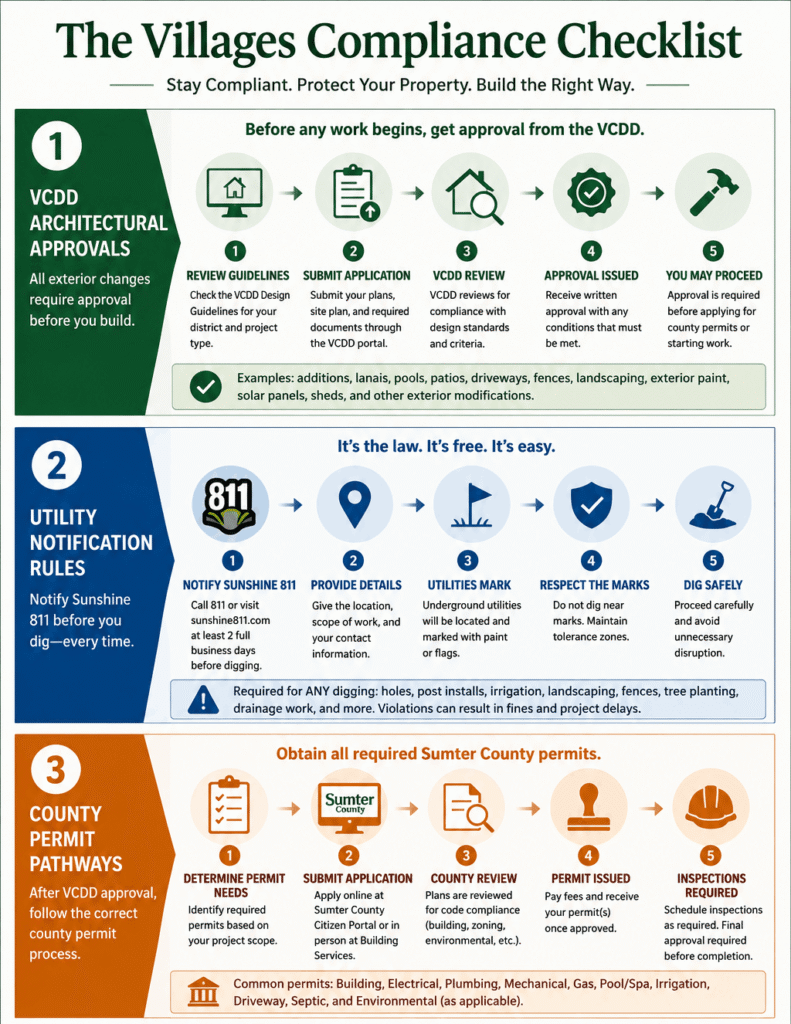
As of 2026, The Villages Community Development Districts (VCDD) maintain strict architectural control standards. Installing an exterior power inlet box, where your generator’s cord hooks up to your home’s electrical grid, requires neat, professional conduit installation that matches your home’s exterior aesthetic. Shoddy, unpermitted DIY work visible from the street can lead to code enforcement violations, legal liabilities, and steep neighborhood fines.
The Lethal Dangers of DIY Electrical Installations
Quick Answer: DIY breaker panel modifications expose you to fatal arc flashes and severe shock hazards. Incorrectly torqueing connections also creates massive structural fire risks behind your garage walls.
With an abundance of online videos showing how to modify an Interlock Kit vs. Transfer Switch setup, it can be tempting to order a generic kit online and attempt a DIY installation. We cannot emphasize this strongly enough: DIY electrical modifications inside your primary breaker panel are exceptionally hazardous, frequently illegal, and heavily discouraged.
The Hazard of Lethal Voltage and Arc Flash
When you remove the deadfront cover of your main breaker panel, you are exposed to raw, uninsulated electrical lines coming straight from the utility transformer. One slip of a screwdriver, an accidental touch, or dropped hardware can instantly trigger an arc flash. This sudden electrical explosion reaches temperatures hotter than the surface of the sun, causing severe blindness, third-degree burns, or instant electrocution.
[DIY Panel Modification Attempt] ──> [Accidental Phase-to-Phase Contact] ──> [Instant Arc Flash Explosion]
The Threat of Fire from Improper Torque and Wire Sizing
Connecting a generator breaker or routing circuits to a transfer switch requires precise torque measurements using certified tools. Under-tightening a terminal lug creates high electrical resistance, leading to rapid heat buildup and localized melting that can spark a catastrophic house fire. Furthermore, utilizing incorrect wire gauges can cause insulation breakdown inside your walls long after the installation is complete.
Why Professional Installation Is Non-Negotiable for Insurance and Compliance
Quick Answer: Hiring a licensed electrician protects your property valuation, validates your homeowner’s insurance policy, and ensures your backup generation system passes all local safety inspections.
By partnering with the licensed, insured team at Tropical Electric FL, you safeguard your family and protect your largest financial asset: your home.
Preserving Your Homeowner’s Insurance Policy
Insurance companies look for any unpermitted, non-professional electrical work when reviewing claims related to fire or electrical damage. If your home experiences an electrical fire and investigators discover a DIY-installed interlock kit or transfer switch, your insurance carrier has the legal grounds to completely deny your claim. This leaves you personally liable for the entirety of the property damage.
The Tropical Electric FL Professional Edge
When you choose our premier residential electrical services, you receive an elite level of care and professional expertise:
-
Code-Compliant Permitting: We manage the entire municipal permitting process across Sumter, Lake, and Marion counties, ensuring your installation fully satisfies all local inspectors.
-
Rigorous Load Calculations: Our experts evaluate your generator’s total surge and running watts against your household’s actual power demands, recommending the ideal configuration for your home.
-
Comprehensive Client Onboarding: We don’t just complete the technical installation and leave. Our team walks you through a comprehensive, step-by-step physical demonstration. We show you exactly how to position your generator outside, run the power cord safely, manage your breakers, and handle the power transfer process seamlessly so you are fully prepared before a major storm system strikes.
Frequently Asked Questions (FAQs)
Q1: Can I run my central air conditioning system using an interlock kit?
This depends entirely on the size of your portable generator and your AC unit’s locked rotor amps (LRA). Standard central air conditioners require an immense amount of power to start up. If you plan to power your central AC during a grid failure, you will likely need a massive portable generator paired with a professionally installed soft starter on your AC compressor to reduce the initial power surge.
Q2: How far away from my home should the generator be when plugged into the inlet box?
According to data provided by the Consumer Product Safety Commission (CPSC), you must always operate your portable generator at least 20 feet away from your home. The engine exhaust must be directed entirely away from all windows, doors, garages, and soffit vents to prevent lethal carbon monoxide poisoning inside your living space.
Q3: Will installing an Interlock Kit vs. Transfer Switch setup damage my sensitive electronics?
Conventional portable generators can produce power with high Total Harmonic Distortion (THD), which can damage sensitive electronics like computers, smart TVs, and modern inverter appliances. To protect your valuable equipment, we recommend using a high-quality inverter generator or combining your backup system with our professional whole-home surge protection services.
Q4: What is the average installation time for a home generator connection package?
A professional generator connection installation typically takes between 2 to 4 hours to complete. This timeframe includes mounting the mechanical interlock plate or the manual transfer switch subpanel, wiring the dedicated outdoor power inlet box through clean conduit, and conducting a full operational load test to verify systemic safety.
Q5: Do I need to inform my utility provider after upgrading my generator hookup?
Yes, it is highly recommended to notify SECO Energy or Duke Energy once your backup system is operational. Keeping your utility company informed ensures their local repair crews are fully aware of alternative power configurations on your street, maximizing field safety during large-scale grid restorations.
Secure Your Peace of Mind with Tropical Electric FL
In the structural comparison of an Interlock Kit vs. Transfer Switch, there is no single wrong choice; there is only the option that best fits your specific budget, equipment size, and lifestyle preferences. If you want maximum budget friendliness and complete access to all your panel’s circuits, a professionally installed interlock kit is a phenomenal option. If you prefer a highly organized, streamlined, and foolproof emergency power routine, a manual transfer switch subpanel is well worth the investment.
No matter which path you select, always prioritize your family’s safety by avoiding dangerous DIY shortcuts. Let the certified professionals manage the hazardous work so you can rest easy knowing your backup system is safe, legal, and code-compliant. Contact Tropical Electric FL today to schedule your neighborhood evaluation.
Need an interlock or transfer switch installed? Our generator installation service handles both, with permits, for homes in Ocala, The Villages and the surrounding area.