
Ceiling fan repair Marion County residents search for most often starts with the same complaint: a wobble, a hum, or a fan that just stopped spinning. The good news is that most of these issues trace back to a loose mount, a worn capacitor, or a wiring connection that has vibrated loose over time — all fixable by a licensed electrician in a single visit. A misdiagnosed fan, though, can hide a bigger electrical problem behind the ceiling box.
Marion County’s heat and humidity push ceiling fans harder than almost anywhere else in the country, which means our fans age faster than the national average. Homeowners in Ocala, Belleview, and Summerfield often assume a noisy fan just needs oil or a new remote, when the real culprit is a failing motor bearing or an outdated electrical box that was never rated to carry a fan’s weight. Getting the diagnosis right the first time saves money and prevents a fan from eventually falling.
📌 Key Takeaways
- Wobbling, clicking, or humming fans usually point to loose blades, a bad capacitor, or motor wear — not always a full replacement.
- Never wire a ceiling fan to a standard light-fixture box; it must be rated for ceiling fan support per the National Electrical Code.
- DIY is fine for cleaning blades and tightening visible screws; wiring and bracket issues call for a licensed Marion County electrician.
- Most ceiling fan repairs in our service area run $85–$250, while full replacement/installation runs higher.
- Regular seasonal maintenance can add years to a fan’s motor life in Florida’s humid climate.
Jump to a section:
- Common Ceiling Fan Problems in Marion County Homes
- DIY vs. Calling a Pro for Ceiling Fan Repair
- What Professional Ceiling Fan Repair Involves
- Ceiling Fan Repair Costs in Marion County
- Preventing Future Ceiling Fan Problems
- FAQ
Common Ceiling Fan Problems in Marion County Homes
Quick Answer: Most ceiling fan complaints in our area come down to three things — mechanical wobble, electrical wiring faults, or a worn-out motor. Knowing which category your fan falls into helps decide whether it’s a quick fix or a bigger job.
Wobbling and Noise Issues
A wobbling fan is almost always mechanical. Loose blade screws, an unbalanced blade, or a downrod (the pole connecting the fan to the ceiling mount) that isn’t seated correctly are the usual suspects. In our experience servicing homes from Belleview to The Villages, dust buildup on one blade is a surprisingly common cause of imbalance that homeowners overlook.
Clicking or grinding sounds usually mean the motor bearings are wearing down, especially on fans older than eight to ten years. Florida’s humidity accelerates this wear compared to drier climates, which is one reason our fans don’t always last as long as national averages suggest.
✅ Quick Tip: Before calling anyone, turn off the fan and gently wiggle each blade by hand. If one blade flexes more than the others, it may be warped and throwing off the balance.
Electrical Wiring Problems
A fan that hums but won’t spin, or one that only works on certain speeds, often points to a failing capacitor or a loose wire nut inside the switch housing. These are electrical issues, not mechanical ones, and they carry real safety risk if ignored.
Older Marion County homes — particularly those built before the 1990s — sometimes have ceiling boxes that were never designed to hold a moving fan. The U.S. Consumer Product Safety Commission has documented injuries tied to fans mounted on unsupported boxes, which is why our technicians always check the box rating before touching the wiring.
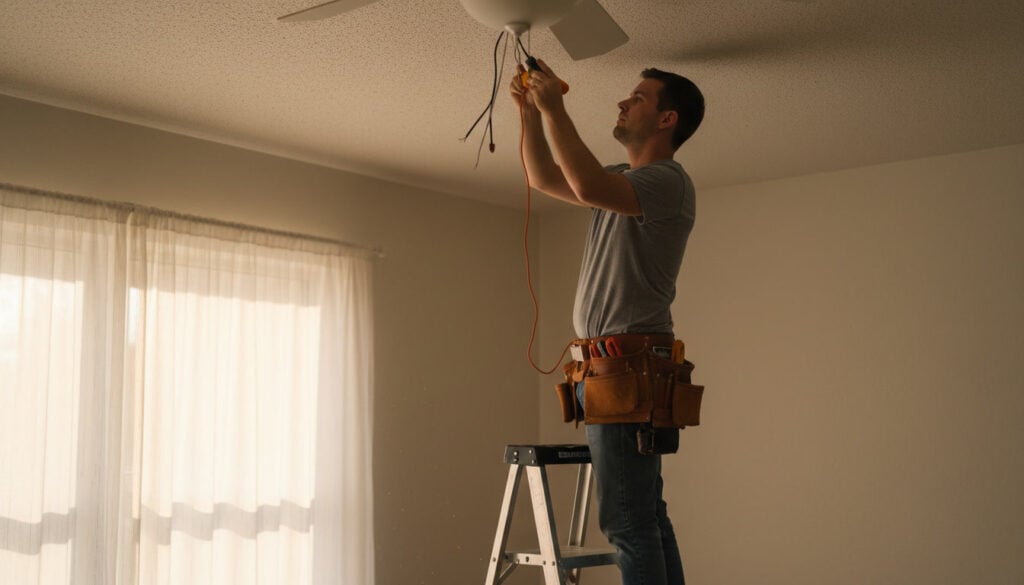
Ceiling Fan Repair Marion County Homeowners Can DIY vs. Call a Pro
Quick Answer: Cleaning, tightening visible screws, and swapping remote batteries are safe DIY tasks. Anything involving the wiring, the mounting bracket, or the ceiling box itself should go to a licensed electrician.
Safe DIY Checks
Start simple. Turn off the fan at the switch and breaker, then check for loose blade screws, a dirty blade balance kit clip, or a remote control that needs new batteries. Many "broken" fans turn out to be a dead remote receiver, which is an inexpensive part to replace.
If the fan wobbles after tightening blades, a small balancing kit (a clip-on weight) sold at most hardware stores can solve it. This is one of the few genuinely safe DIY ceiling fan fixes homeowners in Ocklawaha, Silver Springs, or Lady Lake can handle themselves.
When to Call a Licensed Electrician
Any job that involves opening the switch housing, rewiring, or accessing the ceiling box needs a licensed professional. Florida requires electrical work to be performed by a licensed contractor, and the Florida Department of Business and Professional Regulation oversees that licensing for good reason — improper wiring is a leading cause of house fires.
⚠️ Common Mistake: Homeowners often reuse an old light-fixture box for a new fan install. Standard boxes aren’t rated to support a spinning fan’s weight and vibration, and this is one of the top causes of fans falling from ceilings.
If your fan repair keeps recurring, it may signal a deeper issue like an overloaded circuit tripping the breaker repeatedly, which is worth having inspected alongside the fan itself.
| Task | DIY Safe? | Recommended For |
|---|---|---|
| Cleaning blades/dusting | Yes | Any homeowner |
| Tightening blade screws | Yes | Any homeowner |
| Remote/battery swap | Yes | Any homeowner |
| Balancing kit installation | Usually | Comfortable with a ladder |
| Capacitor replacement | No | Licensed electrician |
| Rewiring switch/box | No | Licensed electrician |
| Bracket/box replacement | No | Licensed electrician |
What Professional Ceiling Fan Repair Involves
Quick Answer: A proper repair visit includes a full electrical diagnosis, not just a blade tighten. Our technicians check the box rating, wiring connections, capacitor, and motor before deciding on repair versus replacement.
Diagnosis and Safety Inspection
When we arrive for a ceiling fan repair Marion County service call, the first step is always power-off verification at the breaker. From there, we inspect the mounting box, check wire nut connections for corrosion (common in Florida’s humidity), and test the capacitor and motor windings.
This diagnostic step matters because a fan that seems purely mechanical can sometimes reveal a loose neutral or an undersized box — issues that tie into broader home electrical health, similar to what we check during a full electrical inspection.
Repair, Rewire, or Replace?
If the motor and blades are sound, we typically repair: replace the capacitor, tighten or reseat the bracket, or correct the wiring. If the box isn’t rated for a fan or the motor has failed, replacement is the safer and more cost-effective long-term choice.
💡 Expert Insight: In our experience, fans installed more than 12-15 years ago often cost more to keep repairing piecemeal than to replace with a modern, energy-efficient unit. According to the U.S. Department of Energy, ENERGY STAR-rated ceiling fans can move air more efficiently than older models, which can modestly lower cooling costs in Florida’s climate.
If you’re weighing a full swap instead of another repair, our ceiling fan installation page walks through options for bedrooms, lanais, and outdoor-rated spaces.
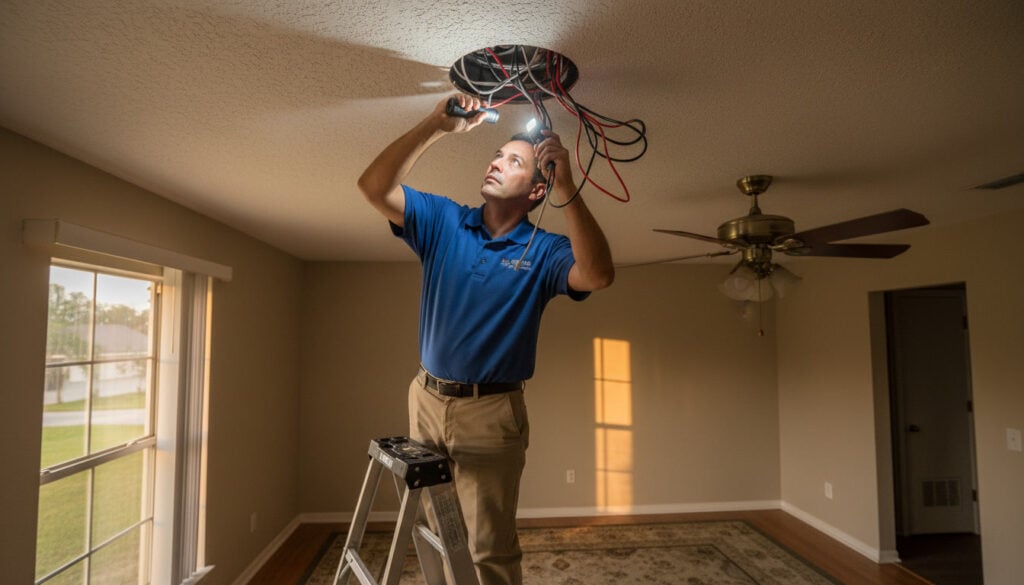
Ceiling Fan Repair Costs in Marion County
Quick Answer: Simple repairs like a capacitor swap or bracket tightening typically run $85-$150. More involved wiring or box replacement jobs can run $150-$250, depending on ceiling access and box condition.
📊 Data Point: Homeowners across our Marion, Sumter, and Lake County service area most often report the issue as either "wobbling" or "not turning on at all" — the two categories that make up the bulk of our repair calls each summer.
| Repair Type | Typical Cost Range | Time on Site |
|---|---|---|
| Capacitor replacement | $85-$130 | 30-45 min |
| Wiring/switch repair | $100-$180 | 45-60 min |
| Bracket/box upgrade | $150-$250 | 1-2 hours |
| Full fan replacement | Varies by fan | 1-2 hours |
Costs can shift based on ceiling height, attic access, and whether the existing box needs to be swapped for a fan-rated one. We always quote before starting work, so there are no surprises on the invoice.
Preventing Future Ceiling Fan Problems
Quick Answer: Seasonal cleaning, an annual screw check, and swapping worn parts early can prevent most emergency ceiling fan calls. A little maintenance goes a long way in Florida’s humid air.
Dust and moisture are the two biggest enemies of ceiling fans in our region. Wiping blades monthly and checking screw tightness every season keeps most fans running quietly for years. Homeowners in Dunnellon, Leesburg, and Fruitland Park who stay on top of this rarely need emergency repair calls.
If your home still has older cloth-insulated wiring or an aluminum branch circuit feeding the fan box, it’s worth having that checked alongside routine maintenance — our whole-home rewire guide covers warning signs worth knowing.
✅ Quick Tip: Run your fan counterclockwise in summer to push cool air down and clockwise in winter to redistribute warm air — this small habit reduces strain on the motor year-round.
FAQ
How much does ceiling fan repair cost in Marion County?
Most ceiling fan repairs in Marion County run between $85 and $250, depending on whether the issue is a simple capacitor swap or a full wiring and bracket repair. Complex jobs involving ceiling box replacement land at the higher end.
Why is my ceiling fan wobbling even after I tightened the screws?
A wobble that persists after tightening screws is usually caused by a warped or unbalanced blade, or a downrod that isn’t seated straight. A balancing kit clip often solves it, but persistent wobble can also signal a loose mounting bracket that needs professional attention.
Can I install a ceiling fan on a regular light fixture box myself?
No — standard light-fixture boxes are not rated to support the weight and vibration of a spinning fan. Florida code requires a fan-rated box, and using the wrong one is a documented safety hazard according to the CPSC.
What does it mean when my ceiling fan hums but doesn’t spin?
A humming fan that won’t spin usually points to a failed or failing capacitor, which is an inexpensive electrical part that regulates motor speed. This repair should be handled by a licensed electrician since it involves opening live wiring.
Is ceiling fan repair worth it or should I just replace the fan?
If the motor and wiring are sound, repair is almost always the more cost-effective option. Once a fan is over 12-15 years old or has recurring motor issues, replacement with a modern, energy-efficient model often makes more financial sense.
Do you offer ceiling fan repair near me in Marion County?
Yes, Tropical Electrical provides ceiling fan repair and installation throughout Marion County, including Ocala, Belleview, Summerfield, and surrounding communities in our Sumter and Lake County service area.
How long does a typical ceiling fan repair take?
Most repairs are completed in 30 minutes to two hours, depending on whether it’s a straightforward capacitor swap or a more involved bracket and box replacement.
Final Thoughts
Ceiling fan repair Marion County homeowners need doesn’t have to mean a full replacement every time something goes wrong. Most wobbles, hums, and dead switches trace back to a handful of fixable causes — a loose bracket, a worn capacitor, or a wiring connection that has come loose over time. Knowing which repairs are DIY-safe and which need a licensed electrician keeps your family safe and your ceiling fan running for years.
Next steps:
- Turn off the fan and check for loose blade screws or dust buildup.
- Note the exact symptom — wobble, noise, or no power — before calling for service.
- Schedule a diagnostic visit with a licensed Marion County electrician if wiring or the box is involved.
- Ask about upgrading to an energy-efficient model if your fan is over a decade old.
Tropical Electrical is a Veteran-Owned electrical contractor licensed to perform electrical work throughout Marion, Sumter, and Lake counties. Call our team today to schedule your ceiling fan repair or installation and keep your home comfortable through another Florida summer.