
Are whole house surge protectors required by code? As of 2026, the answer is a qualified yes for most new and renovated homes — the National Electrical Code (NEC) has required surge protection at the service panel since 2020, but many older Belleview and Ocala homes were grandfathered in and never got one. That code gap is exactly why so many local homeowners are surprised when a lightning strike fries their AC control board and their insurance adjuster asks if a surge device was installed. Understanding the actual rule, not the rumor, is the first step to protecting your home.
This guide breaks down what NEC 230.67 really says, why it applies (or doesn’t) to your specific house, and what installing whole-house surge protection actually involves in Marion, Sumter, and Lake counties.
📌 Key Takeaways
- NEC 230.67 has required surge protection on new services and panel replacements since the 2020 code cycle.
- Existing homes with no panel changes are usually grandfathered and not legally forced to add one.
- Florida leads the nation in lightning activity, making surge protection a practical necessity regardless of code status.
- A Type 2 surge protective device (SPD) installs directly in your electrical panel and typically takes under an hour.
- Many homeowners insurance carriers now ask about surge protection or offer small discounts for having it.
Jump to a section:
- Does code actually require whole-house surge protection?
- What the National Electrical Code says
- Why Marion County homes need it regardless
- Type 1 vs Type 2 devices explained
- Installation, cost, and what to expect
- FAQ
Does Florida Law Actually Require Whole-House Surge Protection?
Quick Answer: Whole-house surge protectors are required by code only in specific situations — new construction, service panel replacements, and most panel upgrades after 2020. If your existing panel hasn’t been touched, you’re likely not legally required to add one, though it’s still strongly recommended.
The confusion comes from timing. The National Fire Protection Association (NFPA), which publishes the NEC every three years, added the surge protection requirement in the 2020 edition under Section 230.67. Florida adopted this into the Florida Building Code shortly after, so any permit pulled for new construction or a panel swap in Belleview today triggers the rule.
When the Rule Applies to Your House
If you’re doing a panel upgrade or building new, your electrician is required to install a Type 1 or Type 2 SPD at that time. This isn’t optional paperwork — it’s inspected and signed off just like grounding or bonding.
When It Doesn’t Apply
Homes with an original, unmodified panel from before 2020 are typically grandfathered. Code generally isn’t retroactive unless a jurisdiction adopts a specific amendment requiring it, which Marion County has not done as of this writing.
⚠️ Common Mistake: Assuming an older home is automatically protected because a newer neighbor’s house has surge protection. Code compliance is tied to when work was permitted, not the neighborhood.
What the National Electrical Code Says, in Plain English
Quick Answer: NEC 230.67 requires a surge protective device be installed as part of the service equipment for one- and two-family dwellings, specifically for new services, service equipment replacement, and feeder panel installations.
In practice, that means the rule attaches to the work, not the house’s age. Replace your main panel today, and your electrician must install the SPD in the same job — it’s part of an electrical panel upgrade scope now, not an upsell.
Why the Code Changed in the First Place
Before 2020, surge protection was a recommendation, not a requirement. Rising numbers of sensitive electronics — smart thermostats, variable-speed AC compressors, induction cooktops — pushed code panels to treat surge damage as a real safety and cost issue, not a luxury concern.
💡 Expert Insight: In my experience inspecting storm-damaged panels around Belleview, the homes hit hardest almost always have zero surge protection and an older panel bus bar that shows visible pitting from repeated small surges nobody noticed.
Why Belleview and Marion County Homes Need Surge Protection Anyway
Quick Answer: Even where code doesn’t force the issue, Florida’s lightning frequency makes whole-house surge protection a practical necessity, not just a legal checkbox.
Central Florida, including Ocala, The Villages, and Summerfield, sits inside one of the most lightning-active corridors in the country. According to NOAA’s lightning data, Florida consistently ranks among the top states for cloud-to-ground lightning strikes per square mile, and that risk compounds every summer storm season.
The Real Cost of Doing Nothing
A single nearby strike can send a voltage spike through the service line into your panel, damaging anything plugged in at the time — refrigerators, pool pumps, HVAC boards, and home electronics all at once. Compare that repair bill to the modest cost of a device, and the math tips fast toward prevention.
📊 Data Point: Insurance industry data compiled by the Insurance Information Institute shows lightning and related electrical claims remain among the costliest weather-related homeowner losses each year, often running into thousands of dollars per incident.
It’s Not Just About Lightning
Utility switching, grid fluctuations, and even your own AC compressor cycling on can create smaller surges. These add up over time, slowly degrading circuit boards long before a dramatic storm event ever happens — which is why homeowners in Dunnellon and Leesburg sometimes see failures on calm, clear days too.
Type 1 vs. Type 2 Surge Protectors: What’s the Difference?
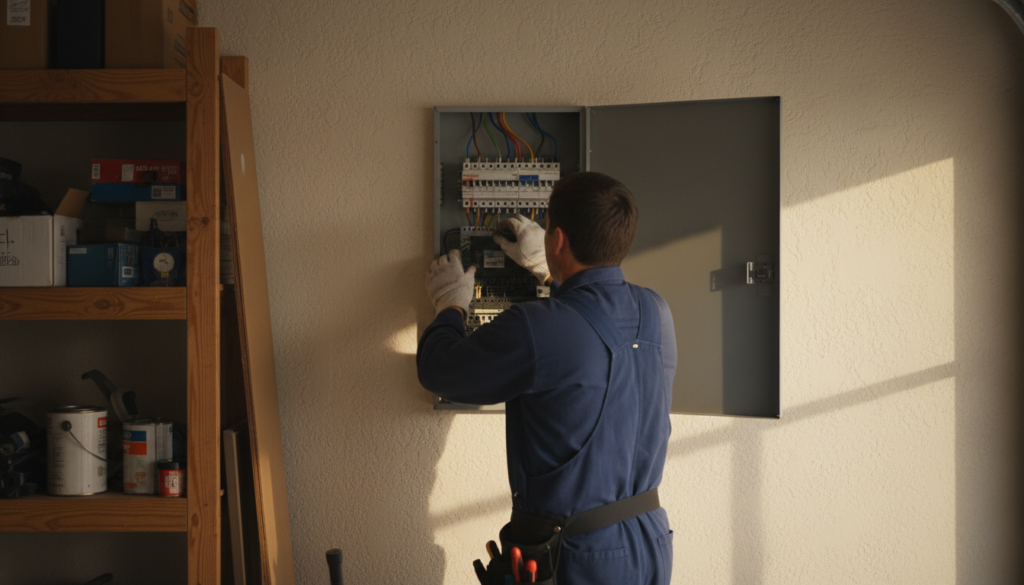
Quick Answer: Type 1 devices install ahead of the main breaker for utility-side protection, while Type 2 devices install inside the panel after the main breaker — most Florida homes use Type 2 or a combination of both.
Understanding the terminology helps you ask the right questions when comparing quotes.
| Feature | Type 1 SPD | Type 2 SPD |
|---|---|---|
| Installation point | Ahead of main breaker (utility side) | Inside panel, after main breaker |
| Typical use | Utility or service entrance | Residential panels, most common choice |
| Protects against | Large external surges (lightning strikes) | Internal + smaller external surges |
| Common pairing | Often paired with Type 2 for full coverage | Standalone or paired with Type 1 |
Which One Do You Actually Need?
For most homes in Ocala, Leesburg, and Fruitland Park, a properly rated Type 2 device installed at the panel provides solid, code-aligned protection. Some homeowners add a Type 1 device for an extra layer, especially on properties with overhead service drops in exposed, storm-prone areas.
✅ Quick Tip: Ask your electrician for the SPD’s kA (kiloamp) surge current rating — higher-rated devices absorb larger spikes before needing replacement.
Installation, Cost, and What to Expect
Quick Answer: A whole-house surge protector installation typically takes under an hour for a licensed electrician and involves connecting the device to open breaker spaces in your existing panel.
If your panel is older or already full, you may need a subpanel or breaker reconfiguration first, which is common during a broader panel upgrade project.
What a Typical Installation Involves
- An electrician evaluates your existing panel and available breaker space.
- The SPD is wired to a dedicated double-pole breaker, or hardwired at the panel lugs depending on the model.
- The device is tested and the panel is labeled per code requirements.
- If required, the permit is closed out with local inspection.
For detailed pricing by panel type and home size, our surge protector cost breakdown covers real Central Florida numbers, not national averages that rarely apply here.
DIY vs. Professional Installation
Surge protectors are not a DIY project. Improper grounding or an undersized device can void the protection entirely, and working inside a live panel without proper training is a genuine safety hazard. A licensed electrician also confirms the device meets Florida Building Code standards for your jurisdiction.
⚠️ Common Mistake: Buying a plug-in power strip labeled "surge protector" and assuming it replaces panel-level protection. Power strips only protect the outlet they’re plugged into — they do nothing for your HVAC, water heater, or hardwired appliances. Our power strip vs. whole-home comparison breaks this down further.
Frequently Asked Questions
Are whole house surge protectors required by code in Florida?
Only for new construction, service changes, and panel replacements permitted after the 2020 NEC adoption. Older, unmodified panels are generally not required to add one, though it’s widely recommended given Florida’s lightning frequency.
Will my homeowners insurance require surge protection?
Some carriers offer discounts for whole-house surge protection, and a few now ask about it during underwriting, but it’s not a universal requirement across Florida policies. Check with your specific carrier for current terms.
Can I install a surge protector without upgrading my whole panel?
In many cases, yes — if there’s open breaker space, a licensed electrician can add a Type 2 SPD without a full panel replacement. If space is limited, a small subpanel or breaker swap may be needed first.
How long does a whole house surge protector last?
Most devices last 5-10 years or until they absorb a major surge event, whichever comes first. Many models include an indicator light showing when the internal component has been sacrificed and needs replacement.
Does a surge protector protect against a direct lightning strike?
No device fully protects against a direct strike to the home itself, but a properly installed SPD significantly reduces damage from the voltage spikes that travel through service lines after nearby strikes. This is a limitation worth understanding honestly rather than overselling.
What’s the difference between a surge protector and a generator transfer switch?
A surge protector guards against voltage spikes, while a transfer switch manages power source switching during an outage — they solve completely different problems and many Marion County homes benefit from both.
Do I need a permit to install a whole house surge protector in Belleview?
Generally yes, since it involves working inside the electrical panel, and your electrician should handle permitting and inspection as part of the job. This also ensures the electrical inspection confirms proper grounding and bonding.
Final Thoughts
So, are whole house surge protectors required by code? Yes, but only in specific circumstances tied to new construction and panel work — not universally for every existing home. Given Florida’s lightning exposure and the rising cost of replacing fried electronics and appliances, most Belleview homeowners choose to install one regardless of whether code technically forces the issue. It’s a modest investment against a very real, very local risk.
Here’s how to move forward:
- Check the age and permit history of your current panel.
- Ask a licensed electrician to evaluate available breaker space for an SPD.
- Compare Type 1 and Type 2 options based on your service configuration.
- Schedule installation before the next storm season peak.
Tropical Electrical is a veteran-owned, licensed electrical contractor serving Belleview, Ocala, The Villages, and the surrounding Marion, Sumter, and Lake county communities. Call today to schedule a whole-house surge protection installation and get straight answers about what your home actually needs.